
We at 42 Films India are dedicated movie watchers and screenplay readers! We love our Indian movies and are big fans of all genres of films. Whether a movie is good or bad, big or small, star cast or newbie ensemble, we enjoy them all. However, we notice that writers and filmmakers tend to fall into some predictable pitfalls in their writing and execution.
Sometimes it’s hard to judge a screenplay by just watching the movie, and we’re very aware that things can go wrong anywhere during the process of filmmaking. A great script can be ruined during production, a bad script can be saved in the edit suite, marketing may make unilateral decisions in packaging the film; the possibilities are endless!
We don’t want to take away the accomplishment of writing a screenplay. We know just how hard, time-consuming and emotionally draining it can be to write a full feature screenplay. But these three mistakes are so common that we can’t help but cringe just a little bit when we see them on the big screen. It makes us sad to see great movies ruined by small mistakes.
1. Structure.
This by far universal blunder derails a script completely
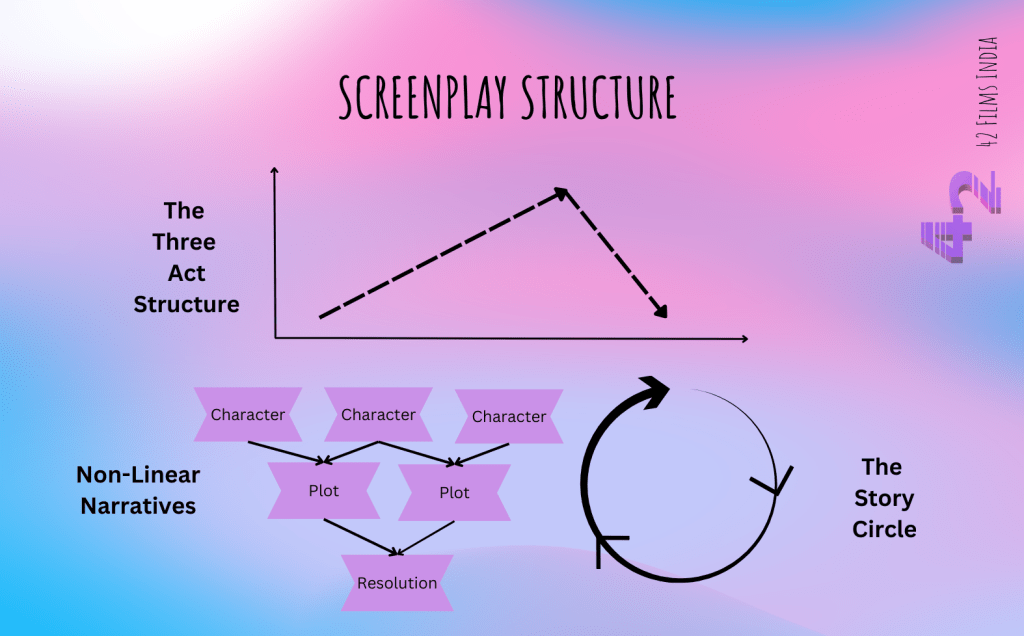
Many Indian scripts fall short in structuring their scripts. While Hollywood seems to run successfully on the three-act structure, India tends to experiment with varied screenplay structures, which is fantastic to see. But all types of screenplay structure follow its grammar and those intrinsic rules to each structure are what we don’t see consistently.
Some of this problem comes from the fact that we still cling to a ‘film formula’. These formulas dictate when a stunt sequence or song sequence has to come in a screenplay irrespective of whether the story requires it. Some of it comes from the requirements of the star cast who perform in the film. If a particular star has based his career growth as an ‘action star’ or as the ‘lover boy’, it’s hard for writers to stand up to their demands.
In the many screenplays we’ve read this year, communicating the necessity of sticking to the structure of the screenplay has been our hardest battle. When the story requires an emotional high point or a plot point reveal, it has to be disclosed at that point. Otherwise, the pacing of the film, the interest of the audience and even the characters lose steam.
One of the primary reasons you feel that a film was ‘lagging’ or ‘too long’ is because the writer took a misstep somewhere in the screenplay’s structure.
2. Cut your darlings!
Letting go of our favourite scenes will make your film more impactful!

Even great writers and filmmakers struggle with this mistake. While it’s hard to write a script, it’s much harder to sit in the editing phase of it and rewrite it. This is the phase when a screenplay starts coming together concisely.
When a writer realizes that a great sequence is suddenly starting to lag. That the only way to make it more impactful is to cut that one scene that they spent three days writing; it can be disheartening. These scenes that are so fun to write are also the ones that are hard to cut. They are also the most frequent culprits for the changes in tone of the film, or for mercurial character arcs.
It’s easier to think that we can always cut these scenes out during post-production. That’s a big no-no. Not only will it ruin your editor’s day to try and find out how to bridge two unrelated scenes in the edit now, but it can also look jarring when the final cut of the film doesn’t flow visually and narratively. If you have proper transitions planned in your pre-viz, they will also be lost if you try and do this.
What we have discovered is that the screenplays that read beautifully are the ones where the writer has sacrificed their indulgences and vanities in the development stage.
3. Tonally consistent resolution to the story.
Keeping the tone of the film consistent in the final act can save a screenplay!
There are two sides to this big mistake that writers and filmmakers make. One aspect is that there is a tonal shift in the final act of the film and the flip side is that there is no emotional resolution.
Let us explain. Do you remember old movies that always became sentimental in the final scenes? That’s because the writers and filmmakers were trying to give emotional closure to the narrative. They veer off into melodramatic sentimentality in the name of emotional closure and forget about being tonally consistent with the previous two hours of the film.
But in recent films, the other aspect of this problem seems more prevalent – there is no emotional closure but it’s tonally consistent with the rest of the film. In genre movies, this problem of tonal consistency vs emotional closure becomes very evident. A comedy movie makes you laugh until the end but no scene gives you emotional closure. An action-packed movie is thrilling until the end but we are left wondering ‘How did they feel about it?’ and in horror movies, not a single emotion is exposed before everyone dies!
Keeping both the tonality and emotions of the characters true in the final act of the film is key to leaving audiences satisfied.
Finally, we’d like to say, rewrite, rewrite and rewrite. Your screenplay can be better, your story can shine, and your message can be impactful, you just have to rewrite it until it’s great!
We hope this was helpful and get in touch with us through the comments or email us for more!
 42 Films India
Leave a comment